
Protect Your Floors From Seasonal Dirt | Miller Cleaning
How Seasonal Weather Brings More Dirt Into Commercial Spaces Every season leaves something behind. Rain turns clean sidewalks into muddy tracks. Summer winds push dust toward your doors. Fall brings wet leaves, while winter sends salt and slush inside with every passing shoe. Before you know it, outdoor dirt has entered your home. A few muddy footprints may seem harmless. However, multiply them by hundreds of daily visitors, and the problem grows quickly. That is why routine commercial floor cleaning plays such an important role in keeping busy buildings clean, safe, and welcoming. In short, seasonal weather increases dirt indoors because rain, snow, pollen, and dust cling to shoes and get tracked inside. Learn why every season brings more dirt and how to stop it before it costs you money. Why Seasonal Weather Causes More Indoor Dirt Weather changes bring different problems. Each season carries its own kind of mess. Here is a quick breakdown. Season Common Dirt & Debris Highest Risk Areas Spring Pollen, mud, rain grit Entryways, mats, lobbies Summer Dust, sand, sticky residue Windows, floors, break rooms Fall Leaves, damp debris Hallways, stairwells Winter Salt, snow melt, slush Entrances, elevators, carpets You can see the pattern. Entryways always take the biggest hit. This is where most cleaning plans should start. Spring: Pollen and Mud Spring rain softens soil into mud. People walk through the mud and track it straight into your building. Pollen also settles on surfaces and triggers allergies indoors. Summer: Dust and Grit Dry heat kicks up dust from parking lots and sidewalks. This dust settles on floors and furniture fast. Sticky spills from drinks also become more common. Fall: Leaves and Dampness Wet leaves crumble into fine debris on floors. This debris is easy to miss during a quick sweep. Damp shoes also add moisture that damages flooring. Winter: Salt and Snowmelt Salt from icy sidewalks scratches and stains flooring. Snowmelt brings in gritty, dirty water that leaves tracks. This combination is one of the toughest to manage. How You Can Protect Your Commercial Space Year-Round The good news is that seasonal dirt is manageable. You need the right systems in place. Here are steps you can take right now. This is where working with a trusted partner helps. Miller Cleaning Services LLC builds seasonal plans around your building’s specific needs. Their team adjusts commercial cleaning schedules as weather patterns shift throughout the year. Floor Refinishing: A Game-Changer for Long-Lasting Floors Daily cleaning protects your floors, but heavy foot traffic eventually leaves scratches, dull spots, and surface wear. Floor refinishing services can restore worn floors while helping protect them from future damage. Picture a busy office near a downtown sidewalk. During winter, hundreds of shoes can track salt and grit across the entrance each day. By spring, the floor may look scratched, cloudy, and worn. That is where professional refinishing makes a difference. Miller Cleaning Services LLC has the experience to restore tired-looking floors and help keep your commercial space looking clean and presentable. Why Professional Support Makes a Difference Seasonal cleaning can quickly become another full-time job for your staff. Someone has to monitor entrances. Someone needs to handle spills. Someone must notice when salt starts building up around the doors. That is a lot to add to an already busy workday. Miller Cleaning Services LLC provides recurring commercial cleaning for offices, retail spaces, and larger facilities. Our team adjusts cleaning plans as weather and traffic patterns change. Working with a reliable commercial floor cleaning provider frees your employees to focus on their actual jobs. Don’t Let the Weather Win You cannot stop rain from falling or leaves from dropping. You cannot keep every visitor from walking through your doors with winter salt on their shoes. But you can stop that outdoor mess from becoming an indoor problem. Seasonal scheduled planning, heavy-duty mats, and a specific cleaning approach for each season protect your spaces year-round. However, you still need professional commercial floor cleaning to keep it protected from debris and salts in winter. More importantly, they help every visitor walk into a space that feels cared for from the moment the door opens. The weather will always leave something at your doorstep. What matters is whether you let it stay there. Frequently Asked Questions 1. How often should commercial floors be cleaned each season? High-foot-traffic spaces usually require daily attention and weekly detailed cleaning to avoid dirt accumulation or seasonal impact. 2. Does weather really affect indoor air quality? Yes. Pollen, dust, and debris go inside and mix in the indoor atmosphere while circulating through HVAC systems, lowering air quality. 3. What is the best way to protect floors from winter salt damage? To protect floors from winter salt damage, use heavy-duty walk-off mats and clean spills quickly. Applying floor refinishing also can protect your floor. 4. How often do commercial floors need refinishing? Most busy commercial spaces benefit from floor refinishing services once or twice a year, depending on the foot traffic of visitors. 5. Can seasonal dirt increase slip-and-fall risks? Yes. In winter, floors commonly experience grit and slipperiness due to rain or snowmelt, which can cause workplace slips or unexpected incidents. 6. Is professional cleaning better than in-house staff for seasonal changes? Professional cleaning providers often come with specialized equipment, products, and experience handling seasonal debris more effectively and efficiently.
Smart Cleaning Habits That Make Offices Feel More Professional
Walking into a well maintained office says something before anyone has spoken a word. Clean floors, clear desks, and fresh air create an impression of order that clients and employees both notice, even if they couldn’t quite explain why a space feels professional. The difference between an office that feels put together and one that feels neglected usually comes down to a handful of consistent habits rather than one big cleaning push before an important visit or client walkthrough. Daily Habits That Prevent Buildup Offices accumulate clutter and grime faster than most people expect, simply from regular use. A few daily habits go a long way toward keeping things from piling up. Weekly Tasks That Keep Things Consistent Beyond daily upkeep, a weekly rhythm helps prevent deeper buildup in areas that don’t get attention every single day. A consistent weekly routine also makes it easier to spot problems early, like a stain that’s starting to set into carpet or a surface that needs more attention than a quick wipe down can provide. Why Floor Care Deserves Special Attention Floors take more daily wear than almost any other surface in an office, and they’re often the first thing a visitor notices when walking in. Regular sweeping, mopping, or vacuuming handles surface level dirt, but floors also need periodic deeper care to stay looking presentable over the long term. Hard floors in particular benefit from more than routine mopping. Foot traffic gradually wears down finishes, leaving floors looking dull even when they’re technically clean. Many businesses researching a cleaning company joplin mo owners rely on eventually learn that floor maintenance involves more than a mop and bucket, especially in high traffic entryways and hallways. For floors that have lost their shine or developed visible wear patterns, floor refinishing joplin mo services can restore a polished look without needing full replacement, which tends to be a more cost effective solution for offices working within a set maintenance budget. Common Mistakes That Undermine a Professional Look A few habits tend to undercut an otherwise decent cleaning routine. These mistakes are easy to overlook because they don’t create an obviously dirty appearance right away, but they do affect how a space feels to anyone spending real time in it. Building a Routine That Actually Sticks The offices that stay consistently clean tend to have a clear routine rather than relying on periodic deep cleans to catch up. Assigning specific tasks to specific days, keeping supplies stocked and accessible, and addressing small issues before they become bigger ones all contribute to a space that feels maintained rather than merely tidied up occasionally. For tasks that fall outside daily upkeep, like deep carpet cleaning or floor restoration, bringing in outside help on a scheduled basis tends to produce more consistent results than trying to handle everything internally without dedicated time or equipment. Miller Cleaning Services LLC and similar providers in the Joplin area often work with offices to build routines suited to their specific space and traffic patterns. Final Thoughts A professional looking office isn’t the result of one thorough cleaning before a big meeting, it’s the outcome of small, consistent habits maintained over time. Daily upkeep prevents buildup, weekly tasks catch what daily habits miss, and periodic deeper care, especially for floors, keeps the space looking its best long term. Offices that treat cleanliness as an ongoing routine rather than an occasional scramble tend to leave a stronger impression on everyone who walks through the door, whether it’s a client, a new hire, or someone stopping by for a single meeting.
Signs Your Carpets Are Holding More Dirt Than You Think
Most people vacuum their carpets, look at them, and figure they’re clean. Fair enough, that’s usually how it works with most things in the house. But carpets are honestly a bit different. A lot of what’s sitting in there isn’t visible at all, it’s buried down in the fibers where a regular vacuum just can’t reach it. That’s actually one of the bigger reasons professional carpet cleaning ends up making more of a difference than people expect, since it gets into layers a normal cleaning routine just doesn’t touch. So here’s a rundown of the signs that your carpet’s holding onto more than it looks like. Your Carpet Looks Clean but Still Smells Off This one trips people up a lot. You vacuum, maybe even spot clean a stain, and the carpet looks fine, but there’s still this faint smell that lingers, especially after rain or on humid days. That smell is usually trapped moisture, dust, or bacteria sitting deep in the padding underneath, not something surface cleaning is going to fix. Allergies Seem Worse Indoors Than Outdoors If sneezing or itchy eyes pick up once you’re inside more than outside, carpets are often part of the reason. They trap dust, pet dander, pollen that gets tracked in, all of it, and hold onto it way longer than hard flooring would. Vacuuming helps some, but it doesn’t pull everything out, not even close. The Carpet Feels Stiff or Crunchy in Spots This is a pretty clear sign there’s built up residue in the fibers, sometimes from old cleaning products that weren’t fully rinsed out, sometimes just from years of foot traffic and dirt compacting into the fibers. Carpet’s supposed to feel soft, so stiffness in certain spots usually means something’s built up that shouldn’t be there. High Traffic Areas Look Darker Than the Rest Hallways, in front of couches, areas near entryways, these spots usually darken over time even with regular vacuuming. That darkening is dirt working its way deeper into the fibers with every step, not just surface dust sitting on top. Stains Keep Coming Back After You Clean Them Ever notice a stain fades after you clean it, then kind of reappears a few days later? That’s called wicking, where dirt or residue sitting deep in the padding slowly works its way back up through the fibers. Surface cleaning alone usually can’t stop that from happening. It’s Been a While Since a Deep Clean Even with good regular vacuuming habits, carpets generally need a deeper clean every so often, especially in homes with pets, kids, or higher foot traffic. If it’s been over a year, there’s a good chance dirt has built up more than it looks like from the surface. This matters just as much for businesses too. Offices, retail spaces, and other commercial properties deal with even more foot traffic than most homes, which is part of why commercial carpet cleaning in Joplin tends to come up so often for businesses trying to keep their space looking presentable without wearing carpets out faster than they should. Wrapping It Up Carpets are a bit deceptive that way, they can look clean on the surface while still holding onto a lot more than you’d guess. Between allergy flare ups, lingering smells, and stains that keep resurfacing, there’s usually more going on beneath the fibers than a quick vacuum can handle. If any of this sounds familiar, Miller Cleaning Services LLC works with homes and businesses throughout Joplin and the surrounding area, helping tackle the kind of buildup that regular cleaning routines tend to miss. Frequently Asked Questions How often should carpets get a deep clean?Most homes do fine with a deep clean every twelve to eighteen months, though homes with pets or kids might need it a bit more often. Can regular vacuuming replace a deep clean?Not really. Vacuuming handles surface dirt well, but it doesn’t reach what’s trapped deeper in the fibers or padding underneath. Why does a stain keep coming back after cleaning it myself?That’s usually wicking, where residue deeper in the carpet slowly resurfaces. It often needs a more thorough clean to fully resolve. Is carpet smell always caused by dirt?Not always, sometimes it’s trapped moisture or bacteria, but dirt buildup is a common contributor too.
How Often Should Offices Be Cleaned?
Why a Consistent Cleaning Schedule Matters More Than You Think Did you know that high-touch office surfaces can harbor harmful pathogens for days without proper sanitation? In spaces where employees gather daily, maintaining a clean environment isn’t just about appearances—it’s a critical factor in promoting health, boosting productivity, and reducing absenteeism. A cluttered or unclean workspace can contribute to distractions, lower morale, and even impact client perceptions during in-person visits, especially in business districts across cities like Springfield and Branson where professional image matters. This guide dives into the essential question: how often should offices be cleaned to ensure a safe, healthy, and efficient workplace? You’ll learn the difference between routine maintenance and deep cleaning, how traffic levels influence cleaning frequency, and practical strategies tailored to various office environments—from small startups to large corporate layouts. We’ll break down cleaning benchmarks by area, including reception zones, break rooms, restrooms, and private offices. By the end, you’ll have a clear framework to assess your current cleaning plan and make informed decisions that support employee well-being and long-term business success—no matter where your office is located. Restroom Hygiene: How Often Should High-Touch Surfaces Be Sanitized? Maintaining clean restrooms is essential for workplace health, safety, and professional image—especially in high-traffic office environments. Restrooms should be cleaned and disinfected at least daily, with high-touch areas receiving even more frequent attention to minimize germ transmission and comply with standard sanitation guidelines. Key zones that require special focus include: To meet industry sanitation standards, cleaning protocols should distinguish between cleaning (removing dirt and debris) and sanitizing (reducing germs to safe levels). Use EPA-registered disinfectants effective against common pathogens, and allow proper dwell time for maximum efficacy. In offices located in densely populated urban centers or shared professional buildings in Springfield, MO, and surrounding areas, increased cleaning frequency may be necessary during flu season or public health concerns. For optimal results, establish a documented restroom cleaning schedule, train custodial staff on OSHA-recommended practices, and stock all stations with necessary supplies. A well-maintained restroom not only supports employee wellness but also creates a positive impression for clients and visitors. Spotless Safety: Keeping Office Kitchens & Break Rooms Hygienic Maintaining a clean office kitchen and break room isn’t just about appearances—it’s essential for health, hygiene, and employee satisfaction. High-traffic areas like these accumulate food debris, grease, and bacteria quickly, making a consistent cleaning schedule critical for infection control. Start daily with wiping countertops, sanitizing sinks, and emptying trash to prevent odors and pests. Appliances like microwaves and refrigerators should be checked every day: remove spills immediately and clear expired food weekly to avoid cross-contamination. Coffee makers and soda fountains need regular descaling and filter replacements to function efficiently and stay germ-free. For deep cleaning, schedule monthly maintenance on ovens, stovetops, and under-sink areas to eliminate built-up grime. Floors should be deep-cleaned weekly using appropriate commercial-grade solutions, especially in high-traffic zones in cities like Springfield or Branson where outdoor pollutants get tracked in. Don’t overlook often-missed spots: cabinet handles, light switches, and饮水机 spigots harbor germs and require disinfecting multiple times per week. Implementing a checklist ensures no task is skipped and supports compliance with local health standards. By following a structured cleaning regimen, businesses reduce the spread of illness, enhance workplace safety, and create a more inviting space for all employees. Mastering Daily Desk and Workspace Sanitation Maintaining a hygienic workspace isn’t just about appearance—it’s a critical factor in employee wellness and productivity. Shared surfaces and frequently touched electronics harbor bacteria and viruses that can contribute to absenteeism, especially during peak cold and flu seasons. Establishing a routine for sanitizing desks, phones, keyboards, and conference room tables helps reduce the spread of germs across office environments. For optimal results, use EPA-registered disinfectants that are effective against common pathogens. Focus on high-touch areas at least once daily, with extra attention in communal zones such as break rooms and copy stations. Key sanitation practices include: In Springfield and other busy metro areas, where offices often operate on tight schedules, integrating smart sanitation habits into daily routines ensures safer, healthier workspaces. Whether your business operates in an open-plan layout or private offices, consistent attention to surface hygiene improves indoor air quality and supports overall environmental wellness. For long-term success, pair daily cleaning with professional deep cleaning services on a weekly or monthly basis. Smart Floor Care Starts With the Right Routine Maintaining clean, safe office floors requires a tailored approach based on both surface type and foot traffic. High-traffic areas like lobbies and hallways demand frequent attention, while private offices may need less intensive care. Understanding your flooring material is the first step to preventing premature wear and maintaining a professional appearance in Springfield and throughout Southwest Missouri. Hard surfaces like tile, vinyl, and sealed concrete should be dry mopped daily and damp mopped 2–3 times per week in moderate-traffic zones. High-traffic zones may require daily wet mopping with a pH-neutral cleaner to avoid residue buildup. Grouted tile needs periodic deep cleaning to prevent dirt and microbial growth. Carpeted areas benefit from vacuuming at least three times weekly in low-traffic spaces and daily in busier zones. Use a vacuum with a HEPA filter to improve indoor air quality. Spot cleaning should be done immediately, and professional extraction cleaning is recommended every 6–12 months depending on use. For polished or hardwood floors, avoid excessive moisture. Regular dust mopping with microfiber cloths helps preserve the finish. Buffing and recoating may be needed annually in high-use areas. Always follow manufacturer guidelines to maintain warranties and prevent damage. Common Questions About Office Cleaning Schedules and Health Standards How often should high-traffic office areas be cleaned? High-touch zones like lobbies, break rooms, and restrooms should be cleaned daily to reduce germ transmission. In locations such as Springfield or Joplin offices, where employee density is higher, sanitizing door handles, light switches, and shared appliances every 24 hours helps maintain health standards and prevent illness outbreaks. What’s the difference between cleaning, disinfecting, and sanitizing? Cleaning removes visible dirt and debris.
How to Choose a Good Janitorial Service
First Impressions Start with a Clean Space A pristine environment isn’t just about aesthetics—it’s a cornerstone of health, productivity, and peace of mind for both homes and offices. Consider this: unclean surfaces can harbor germs and allergens that contribute to frequent sick days and decreased focus. Whether you’re managing a bustling workspace in Springfield or maintaining a spotless household in Branson, choosing the right janitorial service directly impacts your daily well-being and long-term operational success. This guide will walk you through the essential factors to consider when selecting a professional cleaning provider. You’ll learn how to assess service reliability, understand cleaning methodologies like infection control and deep cleaning protocols, and spot red flags before signing a contract. We’ll also cover what to expect in tailored cleaning plans for different environments—from carpets and restrooms to high-touch office equipment. By the end, you’ll be equipped with actionable insights to make an informed decision, ensuring your space remains not only visually clean but genuinely healthy and well-maintained. Let’s dive into what separates an average cleaning service from a truly dependable one. Verify Licensing and Insurance for Peace of Mind When selecting a janitorial service, confirming proper licensing and insurance isn’t just a formality—it’s a critical step in protecting your property and avoiding liability. A licensed provider demonstrates compliance with local regulations and industry standards, especially in regions like Springfield and surrounding Southwest Missouri areas where service qualifications are closely monitored. Licensing ensures the company has undergone official review and meets baseline operational requirements. Equally important is verifying comprehensive insurance coverage, including general liability and workers’ compensation. If an employee is injured on your property or accidental damage occurs during cleaning, a fully insured janitorial company assumes financial responsibility—preventing costly disputes or out-of-pocket expenses for you. Never assume a provider is covered; always request proof of current policies before signing any agreement. To verify credentials: Taking these steps ensures you’re partnering with a responsible, accountable service team. It’s a simple due diligence process that safeguards your home or business while setting the standard for professional, trustworthy service every visit. Why Standard Operating Procedures Matter in Professional Cleaning When evaluating janitorial services, one of the most telling signs of a reliable provider is their use of well-documented Standard Operating Procedures (SOPs). These are systematic guidelines that outline exactly how each cleaning task should be performed—from disinfecting high-touch surfaces to floor maintenance and trash removal. A company with robust SOPs ensures consistency, quality, and accountability across every job, whether it’s a downtown office space or a suburban medical clinic. SOPs eliminate guesswork by specifying what needs to be cleaned, how often, which tools and cleaning agents to use, and the correct techniques for different surfaces. This level of detail minimizes the risk of missed areas, cross-contamination, or damage to property. For businesses in Springfield, Branson, or Joplin, consistent adherence to SOPs means healthier environments and fewer disruptions. Additionally, SOPs reflect a company’s commitment to infection control, safety compliance, and training standards. When cleaners follow repeatable processes, new staff can onboard quickly, and quality doesn’t suffer during high turnover periods. Look for providers who audit their procedures regularly and adjust based on facility type, foot traffic, and local health guidelines—because in professional cleaning, consistency isn’t just about shine; it’s about trust, safety, and long-term results. Why Green Cleaning Is a Smart Choice for Healthier Spaces Choosing a janitorial service that prioritizes green cleaning practices isn’t just good for the environment—it’s a proactive step toward healthier indoor spaces for employees, customers, and families. Eco-friendly cleaning relies on non-toxic, biodegradable solutions and low-impact methods that reduce harmful chemical exposure, a major concern in high-traffic offices and sensitive home environments alike. Green-certified products break down safely, minimizing pollution in local water systems and improving indoor air quality—especially important in tightly sealed buildings common in urban and suburban areas. Many eco-conscious providers also use microfiber technology, HEPA-filter vacuums, and concentrated cleaning formulas that reduce plastic waste and lower carbon footprints from transportation. Beyond health and sustainability, green practices often lead to long-term cost savings. Durable equipment, efficient dosing systems, and reduced need for protective gear or ventilation downtime make these services economically smart. For businesses aiming to meet corporate sustainability goals or comply with green building standards, partnering with janitorial teams that follow established environmental protocols adds measurable value. Look for service providers trained in recognized green cleaning frameworks and those who openly share their product ingredients and methods. This transparency ensures you’re not just getting a clean space, but a genuinely healthier one. Break Down Pricing Models & Service Scope for Office Cleaning Understanding how janitorial services structure their pricing and define service scope is critical when maintaining clean, healthy office environments. Different providers use varied approaches—knowing these helps avoid surprises and ensures you get the right level of cleaning for your space. The two most common pricing models are per-square-foot and fixed-rate bidding. Per-square-foot pricing scales with your facility size, making it ideal for larger offices or multi-floor buildings. Fixed-rate models offer predictable monthly costs but require clear scope definitions to prevent service gaps. Be cautious of providers offering unusually low rates—often, these indicate corner-cutting or bait-and-switch tactics. Service scope varies widely. Some companies provide only basic janitorial (trash removal, vacuuming), while others include enhanced cleaning—disinfecting high-touch surfaces, restroom sanitization, and floor maintenance. Deep cleaning services, like carpet extraction or grime removal, are often billed separately or scheduled quarterly. When comparing providers: In Springfield and the surrounding Ozarks region, facility size and foot traffic directly influence cleaning demands. A thorough provider will conduct a site assessment before quoting—never rely on estimates based solely on square footage. Choose a service that balances transparency, scope comprehensiveness, and long-term reliability. Common Questions About Hiring Janitorial Services Choosing the right cleaning partner for your home or business often comes with questions—especially when you’re entrusting the health and appearance of your space to a third party. Understanding what to ask and what to expect can make all the difference in achieving consistent, reliable
Commercial Cleaning Costs & Services: Expert Guide
Why Smart Businesses Prioritize Transparent Cleaning Costs Maintaining a clean, professional workspace isn’t just about appearances—it’s a critical component of employee health, client perception, and operational efficiency. Across industries, poorly managed facilities contribute to higher absenteeism, reduced productivity, and even reputational damage. Understanding commercial cleaning costs helps business leaders make informed decisions that balance hygiene standards with budget constraints. Whether managing an office in downtown Springfield, a medical facility in Branson, or a retail space in Nixa, location-specific factors like square footage, foot traffic, and sanitation requirements all influence service pricing. This guide breaks down the core elements that shape commercial cleaning expenses, from basic sweeping and mopping to advanced disinfection protocols and scheduled deep cleaning. You’ll learn how service frequency, specialized equipment, and eco-friendly product use impact overall investment. We’ll also explore common pricing models—per square foot, hourly rates, and customized bids—so you can compare options effectively. By the end, you’ll be equipped to evaluate quotes with confidence, avoid hidden fees, and select a service structure that aligns with your facility’s unique demands and long-term goals. What Really Determines Your Commercial Cleaning Bill? Understanding commercial cleaning costs starts with recognizing the key variables that shape pricing. While every business has unique needs, several consistent factors influence the final quote you’ll receive. Knowing these helps you budget accurately and compare services effectively, whether you’re managing an office in Springfield or a retail space in Branson. First, square footage is a primary driver—larger spaces naturally require more time and resources. However, it’s not just about size. The type of facility plays a major role; medical offices and daycare centers often require disinfection protocols that increase labor and material costs compared to standard office environments. Cleaning frequency is another crucial factor. Daily cleanings may reduce the time per visit due to less buildup, but weekly or biweekly services often come with higher per-visit costs to handle accumulated grime. Additionally, service scope matters significantly. A basic clean (emptying trash, surface wiping) costs less than deep cleaning tasks like floor stripping, high-dusting, or restroom sanitization. Other considerations include access to the space, staff entry requirements, and the availability of cleaning supplies. Facilities with after-hours access or strict security protocols may incur slight premium charges. Finally, local labor rates in the Missouri region impact overall pricing, making it essential to request detailed, line-item proposals to understand exactly what you’re paying for. 7 Core Services Included in Standard Janitorial Cleaning Packages When evaluating commercial cleaning costs, it’s essential to understand exactly what’s covered in typical janitorial service packages. Knowing the standard inclusions helps businesses in Springfield, MO, and similar markets make informed decisions and ensure they’re getting comprehensive care for their facilities. How to Compare Cleaning Service Quotes Like a Pro: A Step-by-Step Guide When evaluating commercial cleaning costs, making an apples-to-apples comparison is crucial for finding the best value. Follow these steps to ensure you’re assessing quotes accurately and avoiding hidden fees. Tip: Focus on total value—not just price—by weighing reliability, responsiveness, and cleaning thoroughness. Your Top Commercial Cleaning Service Questions—Answered How much does commercial cleaning typically cost? Commercial cleaning costs vary based on location, square footage, frequency, and service scope. Most businesses pay a base rate per square foot, with additional charges for specialized tasks like disinfection or carpet cleaning. In Springfield and surrounding areas, standard daily or weekly office cleaning averages between $100–$300 per visit for mid-sized spaces. Larger facilities or those requiring overnight cleaning crews may see higher rates, but bundled service agreements often reduce long-term costs. What’s included in a standard cleaning package? Standard packages typically cover trash removal, restroom sanitation, vacuuming or mopping, dusting surfaces, and disinfecting high-touch points like door handles and light switches. Some providers offer tiered plans, allowing businesses to add services such as window cleaning, floor buffing, or biohazard cleanup based on industry needs. Why do quotes vary so much between providers? Pricing differences often reflect scope—not just square footage. One quote might include mat cleaning and restroom stocking, while another doesn’t. Always request a line-item breakdown to ensure fair comparisons. How often should my business be cleaned? Daily cleaning is ideal for high-traffic offices, medical facilities, or retail. Low-occupancy spaces may opt for twice-weekly service. Many businesses in the Branson and Ozarks region choose a hybrid model: light daily cleanings with deep cleans weekly. Do I need a contract? While some providers offer month-to-month plans, service agreements ensure scheduling consistency and often include cost savings. Always review termination clauses and service guarantees. Can cleaning services help with infection control? Yes—many providers offer electrostatic disinfection and EPA-approved sanitization protocols, especially important for healthcare, fitness centers, and schools. How do I choose the right provider locally? Look for licensed, insured companies with experience in your industry. Ask about staff training, green cleaning options, and whether they customize checklists to match your facility’s standards. Make the Right Choice for Your Cleaning Needs Understanding commercial cleaning costs and services is essential for maintaining a healthy, productive environment in any business setting. From breakroom sanitation to high-traffic floor maintenance, each aspect of a cleaning plan plays a role in overall operational efficiency. Factors like space size, frequency of service, and specialized needs—such as infection control or deep cleaning—directly influence pricing and service structure. By assessing your facility’s unique demands, you can avoid underpaying for inadequate service or overpaying for unnecessary extras. To make an informed decision: Choosing the right commercial cleaning solution isn’t just about cost—it’s about consistency, reliability, and long-term value. A well-maintained workspace supports employee wellness, leaves a strong impression on clients, and reinforces professionalism across industries. Whether you manage a small office in Springfield or a multi-location operation across southwest Missouri, investing time in understanding your cleaning needs leads to smarter spending and better outcomes. Take the next step: review your current cleaning plan, note any recurring issues, and reach out to discuss a customized service approach that fits your schedule and budget. Your clean, healthy workplace starts with informed choices.
What Do Janitorial Companies Offer? Full Service List
What Modern Cleaning Services Actually Include Did you know most commercial spaces require at least five different cleaning processes weekly to maintain health standards and prolong facility longevity? From daily touchpoints to seasonal deep cleans, janitorial companies offer structured, scalable solutions tailored to diverse environments like offices, retail spaces, and medical facilities. This guide unpacks the full scope of services homeowners and business operators can expect, helping you identify gaps in your current cleaning routine and understand what professional support truly entails. You’ll learn the difference between basic tidying and comprehensive sanitation, discover key tasks included in routine maintenance plans, and gain insight into specialized cleaning methods like high-pressure washing, biohazard decontamination, and electrostatic disinfection. We’ll cover everything from floor care and restroom sanitation to air quality management and post-construction cleanup. Whether you manage a small storefront in Springfield or a multi-story office building in Branson, understanding these service categories ensures you’re getting the right level of care for your space, safety, and industry compliance needs. Essential Core Services You Can Expect from Professional Janitorial Teams When maintaining a clean, healthy environment in offices, retail spaces, or medical facilities across Springfield, Branson, and Southwest Missouri, professional janitorial companies deliver far more than basic tidying. These teams provide structured, consistent cleaning through essential core services designed to support hygiene, safety, and daily operations. What’s Included: Supplies & Equipment in Professional Cleaning Packages When hiring a janitorial service, it’s important to understand exactly what’s covered—especially when it comes to supplies and equipment. Most full-service packages go beyond just labor, including all necessary cleaning products, tools, and specialized machinery to maintain a sanitary, professional environment. This means businesses in Springfield, Branson, and surrounding areas can streamline operations without the hassle of restocking or equipment upkeep. Reputable providers supply hospital-grade disinfectants, degreasers, glass cleaners, and surface-safe solutions tailored to different materials—from stainless steel to hardwood. Alongside chemicals, expect high-performance gear such as microfiber cloths, mops, HEPA-filter vacuums, auto-scrubbers, and floor buffers. For restrooms, services typically include toilet bowl cleaners, air fresheners, and touch-free refill systems for soap and paper dispensers. Commercial kitchens and high-traffic zones often require specialized tools like steam cleaners or carpet extractors, which are standard in comprehensive plans. This all-inclusive approach ensures consistent cleanliness, improves indoor air quality, and supports infection control—critical for offices, medical facilities, and retail spaces. By providing the right supplies and equipment, janitorial teams help maintain compliance with health standards while reducing long-term operational costs for facility managers. Beyond the Basics: Specialty Services That Elevate Cleanliness Standards While routine sweeping, mopping, and trash removal keep spaces presentable, specialty janitorial services address deeper hygiene needs and enhance long-term maintenance. These add-on offerings are essential for facilities aiming to improve indoor air quality, prolong the lifespan of building materials, and maintain compliance with health regulations—especially in high-traffic areas across Springfield, Joplin, and the surrounding Southwest Missouri regions. Professional carpet cleaning, for instance, uses hot water extraction or low-moisture techniques to remove deeply embedded allergens, stains, and odor-causing bacteria. Similarly, exterior and interior window washing not only boosts curb appeal but also prevents glass degradation from environmental grime and hard water buildup. Infection control cleaning has become a priority in schools, medical offices, and commercial buildings. This targeted service includes electrostatic spraying, high-touch point disinfection, and EPA-registered sanitizers effective against viruses and pathogens. Other valuable add-ons include: These services are typically scheduled monthly, quarterly, or seasonally, depending on facility use. Incorporating them into your maintenance plan ensures a healthier, more professional environment for employees, clients, and visitors alike. What Services Are Typically Included in a Janitorial Cleaning Plan? What exactly do janitorial companies clean on a regular basis? Standard janitorial services cover high-touch areas and essential spaces to maintain hygiene and appearance. This includes dusting and wiping down desks, emptying trash, sanitizing restrooms, mopping hard floors, and vacuuming carpets. Entryways, break rooms, and communal spaces are also routinely addressed. In office environments, shared equipment like printers and vending machines are often included. How often should janitorial services be scheduled? Frequency depends on traffic and usage. Most businesses opt for nightly cleaning Monday through Friday. High-traffic areas like medical offices or retail spaces in Springfield or Branson may require daily midday touch-ups. Light-use facilities, such as small professional offices, might schedule service 2–3 times per week. Can cleaning plans be customized for specific needs? Absolutely. Providers offer scalable packages based on square footage, layout, and industry requirements. You can add deep cleaning tasks—like grout scrubbing or furniture sanitization—on a monthly or quarterly basis. Are eco-friendly products available? Yes, many companies offer green cleaning solutions upon request, using EPA-compliant disinfectants and low-VOC products. Do janitorial teams provide their own supplies? Typically, yes—equipment, chemicals, and disposables are included unless otherwise specified. What if my schedule changes or I need extra cleaning? Most service providers allow flexible rescheduling and offer on-demand deep cleans or post-construction cleanup as add-ons. The Lasting Value of a Truly Clean Space A truly comprehensive janitorial service does far more than tidy up—it protects health, boosts productivity, and enhances the day-to-day experience in both homes and businesses. From routine dusting and vacuuming to specialized disinfection and floor maintenance, professional cleaning ensures every surface contributes to a safer, more inviting environment. In high-traffic areas or homes with children and pets, consistent cleaning reduces allergens, prevents pest infestations, and controls the spread of illness-causing germs. For businesses in Springfield, Branson, and surrounding areas, maintaining a spotless workspace isn’t just about appearances—it’s a key factor in employee well-being and client perception. Likewise, residential clients benefit from customized schedules and eco-friendly products that fit their lifestyle and household needs. Professional teams handle overlooked areas like vents, baseboards, and grout, delivering results that DIY methods often miss. To get the most value, choose a service that offers scalable plans, trained staff, and clear communication. Ready to experience the difference? Evaluate your current cleaning routine and consider upgrading to a full-service provider that aligns with your standards. A cleaner space is within reach—and well worth
Residential vs Commercial Cleaning: Key Differences
What Really Sets Home and Office Cleanings Apart? Ever wonder why cleaning a corporate office feels worlds apart from refreshing a family home? While both aim for cleanliness, the how, what, and why behind residential and commercial cleaning differ drastically—impacting everything from cleaning agents used to the equipment rolled into action. Recognizing these distinctions isn’t just technical jargon; it’s essential for choosing the right service that matches your space’s unique demands. This guide will break down core differences in cleaning frequency, scope of work, regulatory standards, and specialized tools used in each setting. You’ll learn how traffic patterns in a Springfield office building require high-traffic floor maintenance versus the spot-treating common in homes after a weekend bake-off. We’ll explore how infection control protocols in commercial spaces align with health guidelines, while residential cleaning often focuses on allergen reduction and personal preferences. By the end, you’ll confidently identify which service model best supports your environment’s hygiene goals—whether you’re managing a quiet apartment in Branson or a bustling clinic in Nixa. Let’s clarify the confusion and help you make smarter, safer cleaning decisions. Staffing Showdown: How Teams Differ in Home and Office Cleaning When comparing residential and commercial cleaning operations, staffing requirements and team structures reveal key operational contrasts that impact service delivery. Residential cleaning typically involves smaller, flexible teams—often solo technicians or pairs—who move from one home to another with portable kits. These crews focus on personalized service, adapting to different layouts and homeowner preferences across Springfield, Branson, and surrounding neighborhoods. Commercial cleaning, by contrast, runs on structured, larger teams working in coordinated shifts—often after hours in office buildings, medical facilities, or retail centers. You’ll typically see defined roles like team leads, floor technicians, restroom specialists, and inventory handlers working in unison under a supervisor. Shift-based scheduling ensures coverage for consistent nightly or weekly service across high-traffic zones. Here’s how they compare: Understanding these differences helps clients choose the right cleaning model for their space and expectations. Tools of the Trade: Cleaning Equipment Compared for Home and Business Environments Understanding the right equipment can make or break a cleaning job—whether it’s a cozy Springfield bungalow or a bustling downtown office. Residential and commercial cleaning demand distinct tools tailored to their unique challenges, workloads, and standards. Home cleaning typically relies on lightweight, multi-purpose equipment. Think handheld vacuums, microfiber cloths, and compact spray mops—ideal for stairs, tight corners, and delicate surfaces like hardwood floors. These tools prioritize ease of use and storage, perfect for routine dusting and spot cleaning. Commercial cleaning, however, calls for heavy-duty machinery built for efficiency and endurance. You’ll commonly see backpack vacuums that cut cleaning time in large lobbies, industrial floor buffers for restoring shine to tile or marble, and high-efficiency auto-scrubbers used in warehouses or medical facilities. These systems are designed to cover high-traffic square footage quickly while maintaining sanitation standards. Other key differences include: Choosing the correct equipment ensures thorough results, longer-lasting finishes, and safer environments—for both residents and employees. How Cleaning Checklists Vary Between Homes and Offices Understanding the structure of cleaning checklists is key to maintaining hygiene and efficiency, whether in a residence or workplace. In residential settings, checklists tend to focus on lived-in areas like kitchens, bedrooms, and bathrooms, with an emphasis on personal comfort and routine maintenance. Tasks are generally less frequent—often weekly or biweekly—and include dusting, vacuuming, and surface wiping. Commercial cleaning checklists, however, are far more detailed and standardized due to higher traffic and regulatory expectations. They break down responsibilities by zone—reception, restrooms, break rooms—and specify exact procedures, such as disinfecting high-touch points (doorknobs, light switches, elevator buttons) multiple times per day. Frequency is significantly higher: daily for common areas and post-use sanitation in medical or food-handling facilities. Key differences include: Homeowners in Springfield and Branson benefit from simplified routines, while office managers in the Ozarks rely on structured, auditable processes to ensure workplace safety. Using a tailored checklist ensures no task is overlooked—critical for infection control in multi-user environments. Navigating After-Hours Access, Safety Protocols, and Compliance Standards Understanding the differences in access, safety, and compliance between residential and commercial cleaning is essential for maintaining secure, healthy environments. Commercial properties, especially in high-traffic areas like offices and medical facilities in Springfield or downtown Branson, often require after-hours cleaning to minimize disruption—typically between 6 PM and 6 AM. This necessitates secure key management, access control systems, and coordination with building security teams. In contrast, residential cleaning usually occurs during daytime hours with direct homeowner access, reducing complexity in entry protocols. However, commercial cleaning demands adherence to strict safety regulations such as OSHA guidelines, proper handling of hazardous materials, and the use of Safety Data Sheets (SDS) for chemical transparency. Many commercial contracts also require proof of liability insurance and compliance certifications. Choosing the right cleaning approach means aligning with properties’ operational demands, regulatory responsibilities, and security expectations. Frequently Asked Questions: Choosing the Right Cleaning Service What’s the main difference between residential and commercial cleaning staffing? Residential cleaning typically involves smaller teams or solo providers handling homes, while commercial contracts require larger, coordinated crews with defined roles. Commercial jobs often need supervisors, specialized technicians, and shift-based labor to cover after-hours work—especially in offices, medical facilities, or retail spaces in cities like Springfield or Ozark. Do I need different equipment for home vs. business cleaning? Yes. Residential cleaning uses lightweight vacuums, mops, and multi-purpose cleaners for smaller, more personalized spaces. Commercial cleaning relies on heavy-duty extractors, auto-scrubbers, commercial-grade disinfectants, and backpack vacuums designed for large floor areas, high-traffic zones, and regulated environments such as healthcare or hospitality. How does scheduling differ between home and office cleaning? Home cleanings are usually weekly or bi-weekly, scheduled during daytime hours. Commercial cleaning is often performed nightly or on weekends to avoid disrupting business operations. Frequency is based on foot traffic, industry standards, and space utilization. Can the same service handle both residential and commercial jobs? Many providers offer both, but expertise matters. Look for companies trained in OSHA compliance, infection control, and floor maintenance for commercial
The Power of First Impressions

“You never get a second chance to make a first impression.”— Andrew Grant. Those words are just as true today. When ypu go to a business establishment, what initially influences your perception of that business? It’s what you see. Imagine you’re looking to hire a firm for some reason or another. There are several in your area. All have a strong presence online, which is good. But imagine the first place you visit in person looks like the picture above? Clean, well maintained, high-end fixtures. What impression does a space like that leave you with, even if you never speak to anyone that works there? -They’re successful. -They’re at the top of their game. -They know what they’re doing. All that without interacting with a single employee. Now imagine you visit another establishment in the area. As you approach the front door you can see dirty fingerprints covering the glass and door handles. Inside, the floor mat looks like it hasn’t been vacuumed in months. The carpet is covered in stains and hasn’t been cleaned. There’s dust on all the surfaces including the ceiling vents, which are caked in dirt and grime. Even if the employees here are amazing and the quality of their work is on par with the previous business you visited, who comes across as more competent? Again, this impression is formed before a single interaction with a person at the business establishment. This little example just shows how what we see, really drives our decision making, especially in business. It’s one of the reasons we do what we do at Miller Cleaning. Creating that perfect first impression is what will set you apart from the competition and help you to stay top-of-mind for your consumers.
Office Cleanliness & Employee Morale
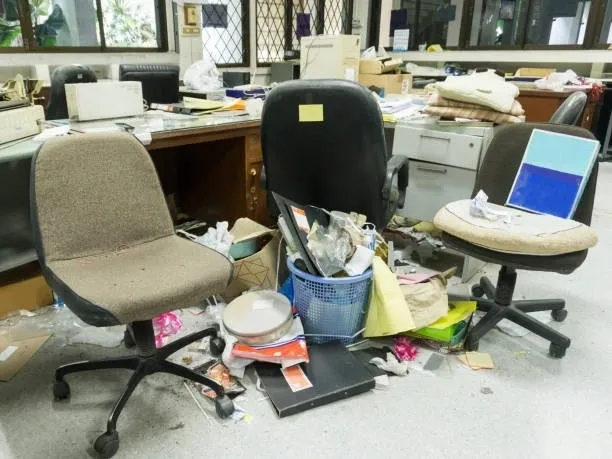
Considering the stressful times we’re in and the challenge of retaining talent in the workplace, doing everything you can to keep office morale high should be a priority. The office is a place that many employees spend a third of their day in so a messy office can make for a stressed, toxic environment (both physically and mentally). According to a survey by CareerBuilder, 40 percent of workers have called in sick in the last 12 months when they weren’t, compared to 35 percent in 2016 and 38 percent in 2015. Much of this can be attributed to low employee morale and high stress in the workplace. They just don’t want to be there. Of course, we can’t eliminate ALL stress in the workplace, but when you look at the image above, tranquility isn’t a word that comes to mind. A clean office can help to promote a more calm environment to work in. Imagine how an employee feels when they come to work and see their desk has been cleaned, their carpet vacuumed, and their trashcan is empty? On the flip side, imagine how they feel when they arrive to work and it looks like the picture above? Give your business the edge and help with employee retention by keeping your facility clean and safe! It’s worth the investment.